

3-05: More Than Intelligence
On What Makes Us Human
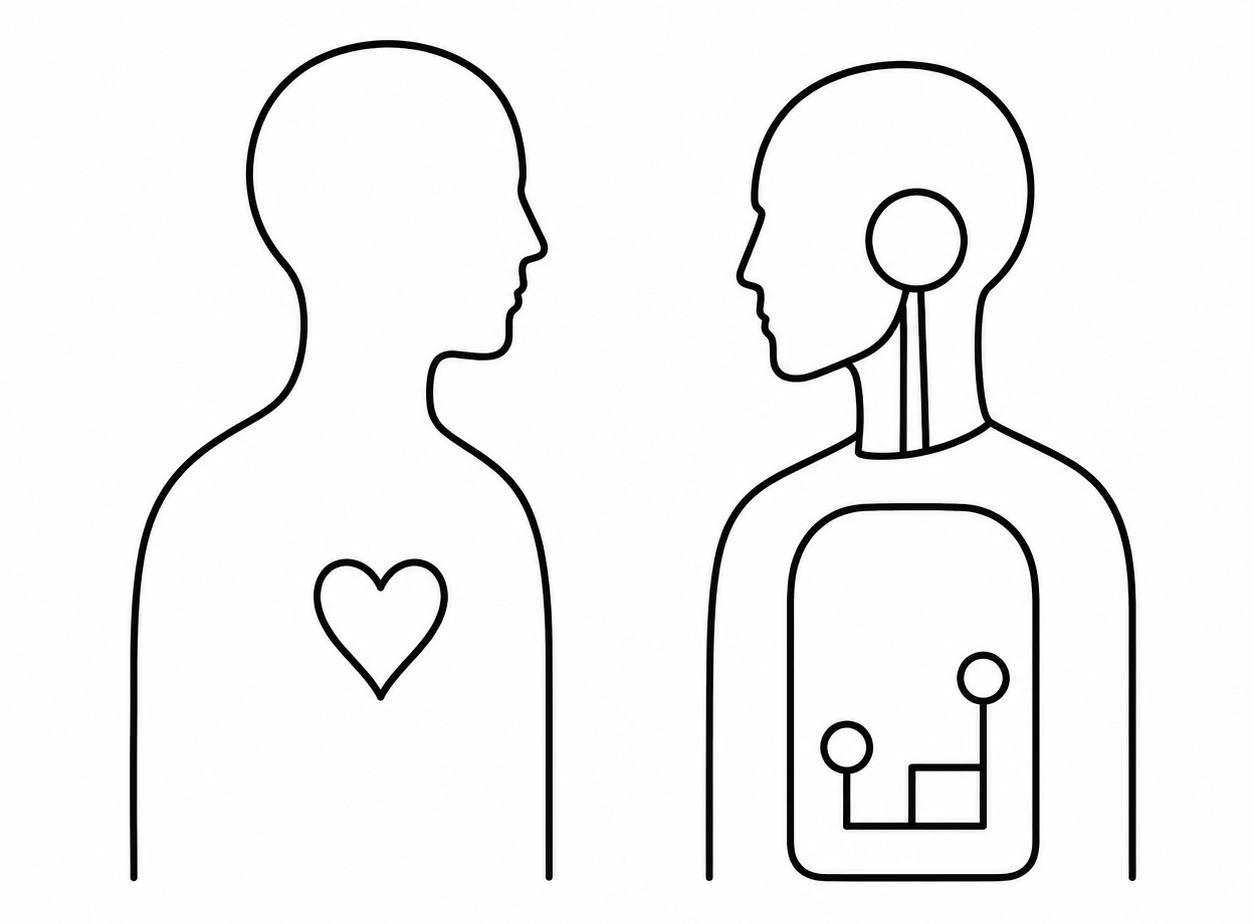
Let’s say the day comes when we are confronted with another intelligent species. How will we know whether they are someone rather than something? They certainly will not be “human,” but to attempt to determine what makes something someone is becoming a worthy consideration.
Yesterday, I gave a homeless man french fries and he looked at me and said a simple “thank you.” I walked down the street to the crosswalk, glanced back to see him eating them, and smiled. A few things happened before, during, and after this exchange. Beforehand, I felt empathetic as I considered the situation this man was in. During, he immediately expressed simple gratitude. Afterwards, I felt thankful to be in the position where I could offer that small gesture. It was a very human exchange that led me to think of what I think makes us human.
Intelligence alone is not a defining characteristic of humanity, though it is a contributing factor. More profound signals are the less-tangible qualities like empathy, gratitude, morality, responsibility, accountability, and the ability to form relationships. This brings to mind another important consideration. Infants, and those with certain neurological disabilities, may not be able to feel or express either empathy or gratitude. Therefore, these qualities cannot define humanity by themselves, but they can still serve as major contributing factors.
For a moment, I wondered whether the first connection between two neurons might signal the beginning of humanity, or at least intelligence. It didn’t take long to see that this is simply a marker of biological complexity that can be found in many other organisms, and many that are microscopic. The daily advances in artificial intelligence are forcing us to consider these questions. A large language model can sound extremely intelligent and has already performed well in Turing-style studies to be mistaken for a human in short text-based conversations. This tells us that language alone cannot be a determining factor in deciding what is human.
Can these AI systems feel empathetic when being exposed to someone’s suffering? Can they feel grateful when someone does something altruistic? These are difficult questions to answer, as the best language models are highly trained in imitating natural human empathy and gratitude through extensive training data, including more-or-less the entirety of the internet.
I have ended this essay with far more questions than answers. I am circling back to the man saying thank you, though. I wonder how long until an AI can convincingly imitate that interaction? Maybe in a decade an Optimus bot will be able to fool me into thinking it’s a homeless person. Won’t that be a world. Until then, I am finding myself valuing these brief, very human interactions more and more.