

3-03: The Pistachio Problem
On Desire, Freedom, and Purpose
So often, freedom is placed on a pedestal, as if it is the only thing to seek. We seek freedom in space, time, money, and choices. Lately, I’m realizing that a clear sense of direction is more valuable than simply having more choices. What we really want is to understand our own desires more clearly, while still having the freedom to act on them.
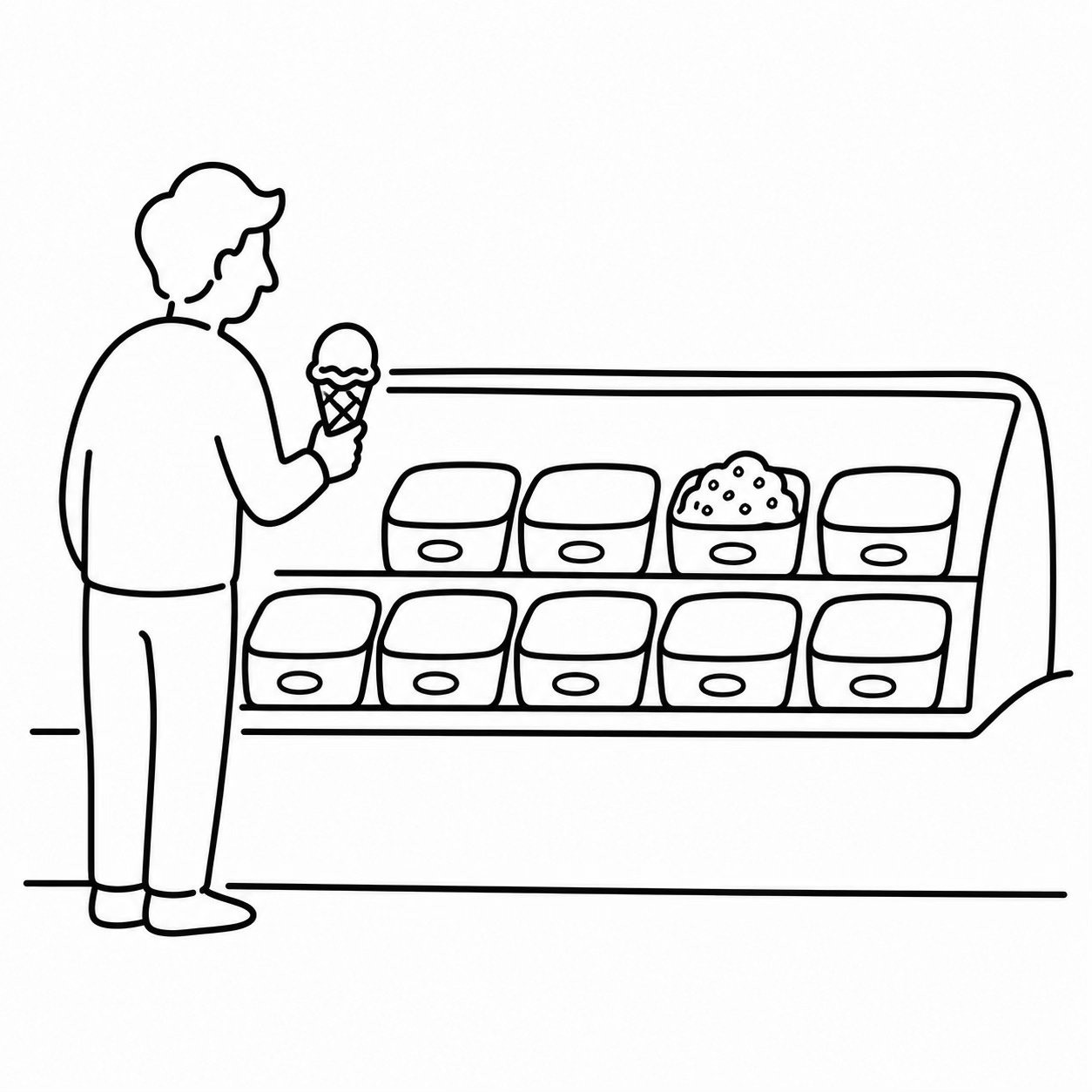
Let’s take an example you may be familiar with, like going out for ice cream. You always order the pistachio ice cream (great choice). All of the other ice creams in the bins may as well be completely fake, the sort of mall food court level plastic but still real looking kind. Ninety nine times out of one hundred, that would be perfectly fine. You would be blissfully ignorant to whether the other flavors were real at all, and you probably would not care, because they still had your pistachio. “Freedom” in these ninety nine instances is found in conviction and the certainty of knowing what you desire. That one hundredth time, though, is equally as important because it proves the choice was still yours.
The ice cream shop is a small version of a much larger problem. The same tension can apply to a day, a year, or a career. We have all heard the quips about analysis paralysis, decision overload, or simply, the Cheesecake Factory menu. There is something uniquely satisfying about looking at an endless list of options and knowing that you want nothing other than one item.
The irony is that we often chase freedom as though freedom itself is the sole objective. We tell ourselves we want a responsibility-free Saturday, yet when this freedom finally does arrive, we don’t know what to do with it. When we take stock of how we spent the day and we can hardly think of what we did besides endlessly scrolling on our phones. This mindset leads to blinking and that “free” Saturday ends without feeling pride that anything worthwhile was accomplished.
This feeling of being compelled towards something becomes more meaningful taken beyond what to do with a single day. Knowing what you want does take time, which adds to the irony. As we age we tend to be both more and less free. We may be more free financially, yet less free in the sense of having responsibilities of providing for our family and potentially raising children. Most proud parents will tell you that they would make this trade-off of freedom for responsibilities again every time. Instead of being the goal, freedom should be viewed as something to trade with. In this instance, trading freedom for purpose and a profound sense of direction sounds like a worthy exchange.
In each of these examples, freedom becomes meaningful when it is directly connected to desire. With direction, our choices are made confidently. I do not think that the most well-lived lives are without freedom. The best version of our lives may be one in which we have enough freedom to choose combined with the desire to know which choices are worth choosing.