

2-46: The Cost of Comfort
Tradeoffs of a Frictionless Life
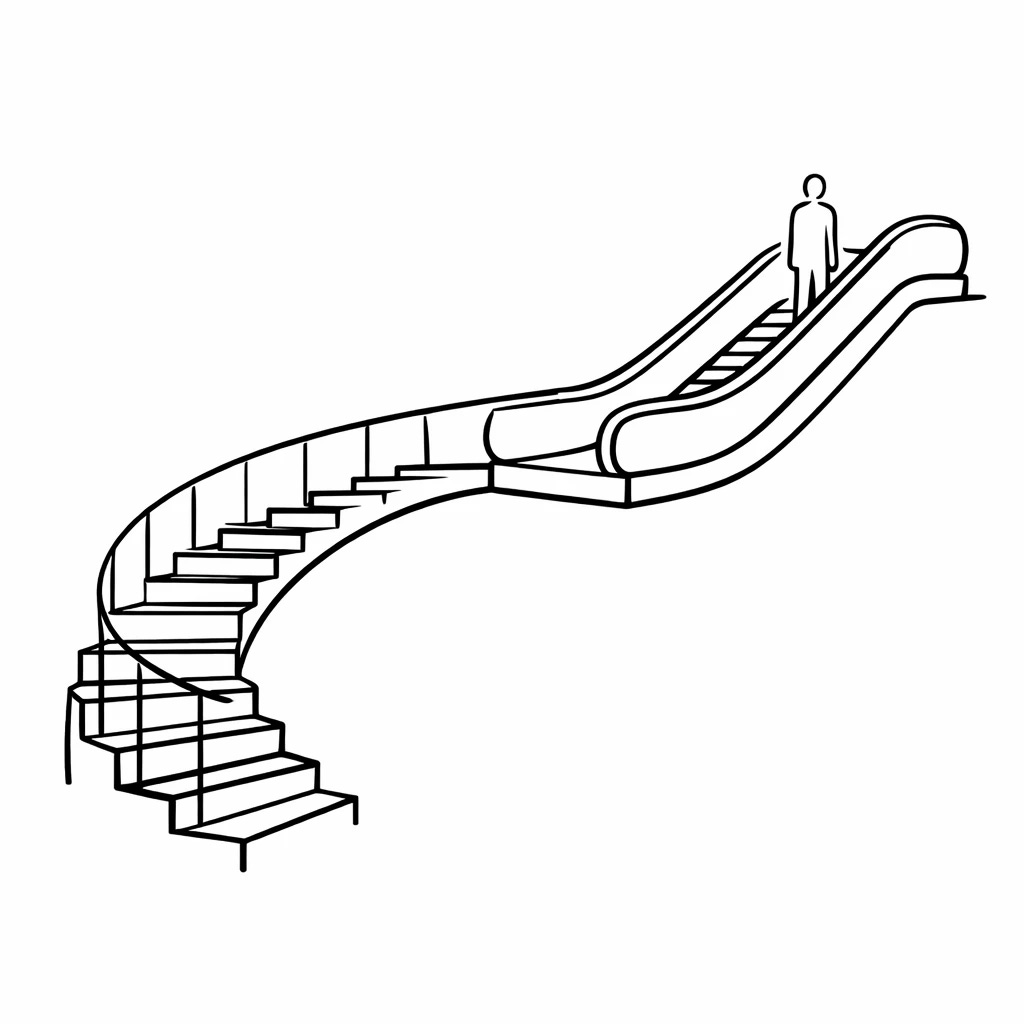
My car drives itself. I’m starting to wonder how long it will take until I am verifiably a worse driver because of that. Since the last update in my car, it has been in self-driving mode for 79% of the time. The other 21%, a statistically inferior human driver was operating it. Tesla’s Full Self-Driving (FSD) mode is something like 5-7 times safer than human driving. What if, over the course of many years, I become only half as safe of a driver I was before using FSD? Statistically, using FSD 79% of the time would still be 42-47% safer than driving entirely by myself.
Thinking of a small part of my life being automated makes me consider how much of our time and energy we will be afforded to reallocate. The mental drain of a commute can be transferred to having more energy to spend with your family when you arrive home. That is what fascinates me about convenience more broadly. As life gradually becomes more frictionless, it gives us back time, energy, and patience. The real question is what we do with it.
Food arrives instantly. Cars drive themselves. Entertainment, and dopamine, are infinite. Google Maps removes the need to remember locations. Search engines remove the need to remember facts. More and more of the small bumps in life are being flattened, which sounds great in theory, but I can’t help but wonder what all of this convenience is really doing for us. If technology removes more friction and inconvenience, where does that saved energy go? Into family, presence, creative work, and peace? Or into more scrolling and passive consumption?
For much of my life, I considered any small increase in efficiency a positive at almost any cost. In many ways, I still do, but lately I have questioned to what end. Once we are used to these newfound comforts, inconvenience will feel stranger. Waiting for anything will feel unreasonable. Getting lost, something of the past. Silence will be foreign. When your electric car jolts you awake to take the wheel, the resulting stress may be even more than your former commute “by-hand.”
I keep circling back to one thing. Something is always given up to attain comfort, whether that is something tangible, like money or battery life, or something more abstract, like attention, patience, or optionality. How much convenience is too much? Some friction is indeed pointless and should be removed. Some of it may still serve a purpose.
A commute that asks nothing of you may leave you feeling more grateful. A life, however, that asks nothing of you may leave you feeling different, too. My car drives itself. That may be a gift, but at the same time it feels like a preview of a bigger question. What are we doing with the time and energy that modern life keeps giving back to us?