

2-27: Porsche Begets Porsche
When Mastery Becomes Mimicry
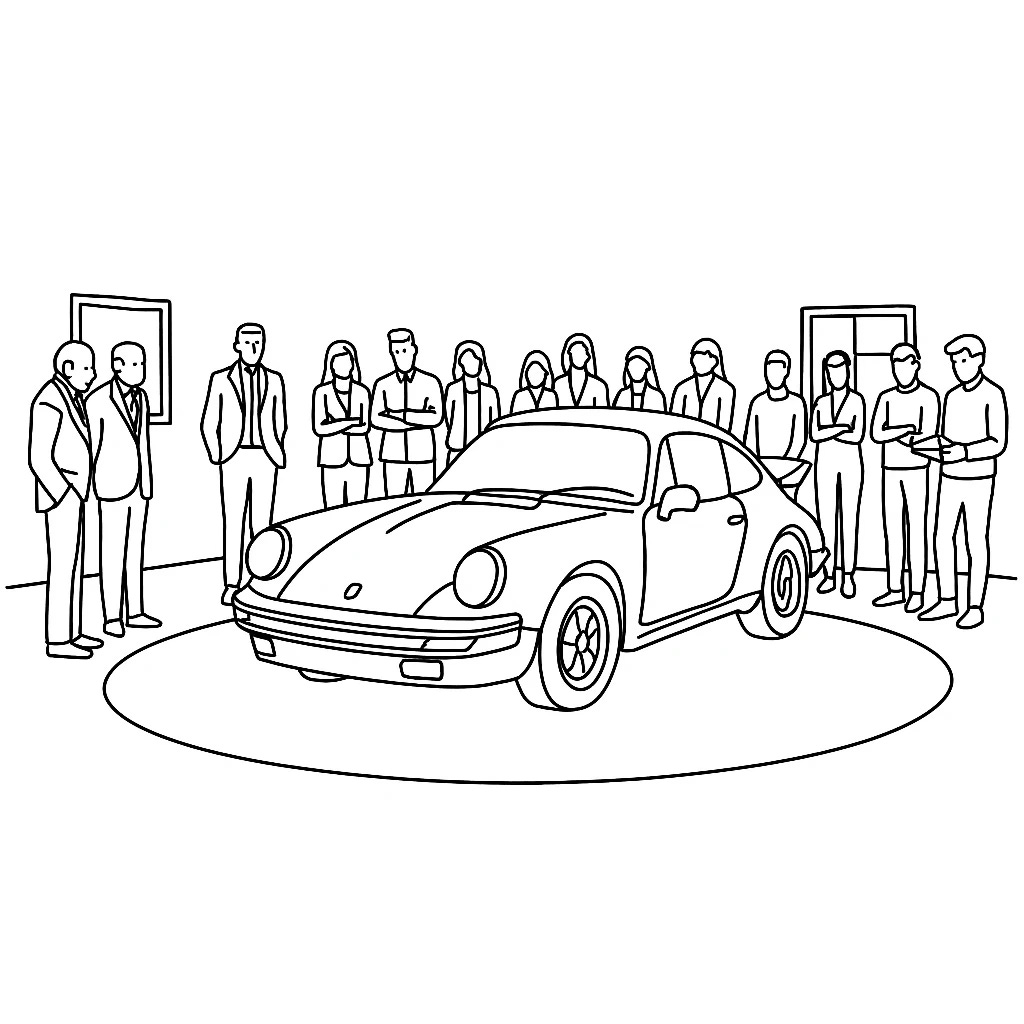
If owning a Porsche only begets owning a Porsche, what’s the point? The purpose of luxury, I think, isn’t simply to indulge the owner, but to inspire those who see it to reach their highest potential. The overwhelming majority of those who admire such cars do so from a place of mimetic desire shaped by culture, or in other words, wanting what others want simply because others want them. It’s fundamentally human to crave craving symbols of progress and proof that hard work, skill, and persistence can translate into tangible reality. The Porsche, especially the 911, is as much art as automotive, capable of reminding young dreamers that excellence is achievable. But if ownership becomes an end in itself, the loop closes, and any true goodness is kicked to the next generation. Success then fuels only more success, wealth begets more wealth, and the symbol loses its substance.
At its best, a Porsche represents mastery. It is art engineered into function. I love the elegance of the 992 generation and the single line of light stretching across the rear, as if drawn with intention in one fell swoop. It demonstrates a tangible outcome of merging precision and beauty. The artistry is inspiring and raises a question about purpose and whether such mastery serves the individual or society as a whole. Despite this, part of me wonders if the same ingenuity that builds these cars could be channeled toward something greater than performance for performance’s sake.
Luxury markets and Veblen goods often walk a thin line between art and excess. The Porsche manufacturing plant might as well be a widget factory. The cars they build are not created to get you from one place to another; that is not their primary objective. They are built to signal, sometimes quite loudly, to others that you have succeeded. Perhaps that’s not inherently wrong. Maybe such signaling is part of what motivates people to push harder and strive for excellence. However, when the pursuit of beauty and status overshadows the pursuit of meaning, we risk losing ourselves to vanity.
The paradox, circling back to the opening question of what the point truly is, is that the same car that inspires one person to dream can imprison another in mimetic jealousy. The challenge is then to outsmart these physical symbols of success and transcend the Porsche-begets-Porsche wheel. True fulfillment lies in channeling that same ambition into creating things that uplift others, advance human progress, and add genuine meaning to the world. In that sense, true fulfillment lies in recognizing when a symbol has served its purpose, when it has done its job of motivating us, and in redirecting that ambition toward something that perpetuates our values rather than just our image.
P.S. I would not be surprised if I own a 911 at some point in my life. Though if and when I do, it would be for my own enjoyment, perhaps to appreciate the burnt orange paint-to-sample in the sun or to take a few laps around my own racetrack. No one would even need to know I have it. The car itself could remain a private symbol of personal joy rather than a public statement to strangers of status.